Ans: SEO for SaaS companies is the practice of optimizing a software-as-a-service website to rank organically for the specific search terms used by potential buyers at each stage of a typically longer, more research-heavy B2B buying journey from early problem-awareness searches through comparison and decision-stage queries. Unlike ecommerce SEO, which optimizes primarily around product and category pages, SaaS SEO leans heavily on educational content, feature and integration pages, comparison content, and product-led landing pages, because SaaS buyers usually research for weeks or months before ever requesting a demo or starting a trial.
Why SaaS SEO Isn't Just SEO with a Software Website
The single structural fact that explains almost every difference between SaaS SEO and other forms of SEO is this: SaaS has a long, multi-stakeholder buying cycle, while most other categories of SEO ecommerce especially optimize around a much shorter, more transactional purchase path.
According to Gartner's B2B Buying Journey research, B2B buyers typically spend a significant portion of their purchase journey conducting independent research before ever engaging directly with a vendor's sales team. That means a SaaS company's organic content has to do far more persuasive and educational work than a typical retail product page, because it's often influencing a buyer long before any sales conversation happens.
This is also why B2B SEO services generally require a different content mix than what works for a Shopify SEO or WordPress SEO project built around product listings. A SaaS company selling to procurement teams, IT departments, or multiple internal stakeholders needs content addressing each of those audiences differently, not a single optimized product description.
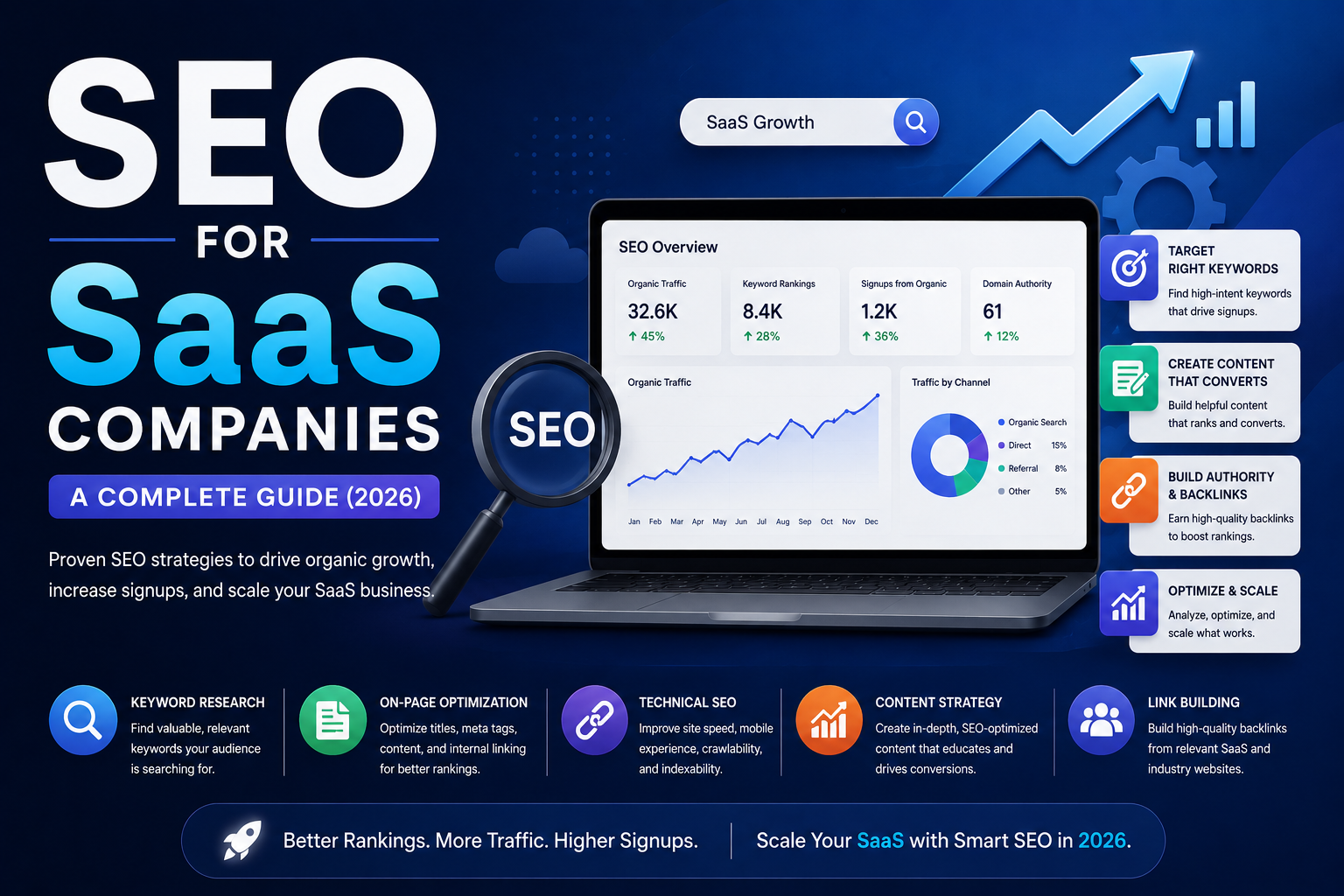
SaaS SEO vs. Ecommerce SEO: The Core Difference
Understanding this distinction changes how you should structure literally every part of a SaaS SEO strategy content calendar, site architecture, and even internal linking.
Ecommerce SEO is built primarily around product and category pages, with supporting blog content mainly used to drive top-of-funnel traffic into a relatively short, transactional purchase path. A shopper searching best running shoes for flat feet is often ready to buy within days.
SaaS SEO Company USA, by contrast, is built around a longer educational funnel: problem-awareness content, solution-comparison content, feature-specific landing pages, integration pages, and finally trial or demo conversion pages. A buyer searching how to reduce customer churn today might not convert into a demo request for another two or three months, after consuming multiple pieces of content along the way.
Aspect | Ecommerce SEO | SaaS SEO |
Core page type | Product/category pages | Feature pages, comparison pages, educational content |
Typical buying cycle | Days to weeks | Weeks to months |
Primary keyword intent | Transactional | Mixed informational, comparison, then transactional |
Key conversion point | Add to cart / checkout | Demo request, free trial, contact sales |
Content depth needed | Often shorter, scannable | Often longer, more technical and educational |
Common supporting service | Shopify SEO, product SEO | B2B SEO, technical SEO, content marketing |
What Makes SaaS SEO Effective
1. Funnel-stage keyword mapping. SaaS keywords split cleanly into problem-awareness (why is my churn rate increasing), solution-comparison (best customer success software), and brand/decision-stage terms ([competitor] alternative), and each needs a distinctly different page type and content depth.
2. Technical performance at scale. SaaS websites often have complex documentation, integration pages, and app-like elements, and according to Google's own Core Web Vitals guidance, page experience signals directly factor into ranking, making technical SEO services a non-negotiable part of any serious SaaS SEO program rather than an optional add-on.
3. Content depth and topical authority. SaaS buyers researching a complex purchase decision reward genuinely thorough content thin, surface-level blog posts rarely rank or convert as well as detailed, expert-level guides that treat the reader as technically capable.
4. Product-led landing pages. Dedicated pages for specific features, integrations, and use cases (e.g., [Product] for Slack integration or [Product] for remote teams) capture highly specific, high-intent searches that generic homepage copy never will.
The SaaS SEO Funnel: Step-by-Step
Step 1: Map the buyer journey to keyword intent. Break your target keywords into problem-awareness, solution-research, comparison, and decision-stage buckets before writing a single piece of content.
Step 2: Build problem-awareness content first. Publish educational articles addressing the underlying pain point your software solves, since this is where the widest top-of-funnel audience actually starts searching.
Step 3: Create comparison and alternative content. Buyers actively researching options search for direct comparisons and competitor alternatives this content captures highly qualified traffic at a critical decision point.
Step 4: Build dedicated feature and integration pages. Rather than cramming every feature onto one crowded page, create individual pages for major features and integrations that match specific, high-intent search queries.
Step 5: Optimize technical foundations. Address site speed, mobile performance, and crawlability early, since SaaS sites with extensive documentation and app-like navigation are especially prone to technical SEO issues that quietly suppress rankings.
Step 6: Build topical authority through content clusters. Group related articles around pillar topics and interlink them, signaling to search engines that your site is a genuine authority on the problem space your software addresses.
SaaS SEO by the Numbers
According to HubSpot's State of Marketing research, organic search consistently ranks among the highest-ROI channels reported by B2B marketing teams, ahead of many paid channels on a cost-per-lead basis over time. Separately, Ahrefs' own study of ranking factors across large keyword datasets has repeatedly found that content depth and backlink profile strength correlate more closely with first-page rankings than raw word count alone, which matters for SaaS content teams tempted to chase length over substance. On the buying-cycle side, Gartner's B2B research consistently shows that B2B buyers complete a substantial share of their research independently before contacting a vendor directly, reinforcing why organic content has to carry real persuasive weight, not just awareness value.
Myth-Busting: SaaS SEO Is Just About Ranking for High-Volume Keywords
A common misconception is that SaaS SEO success comes down to ranking for the highest search-volume keywords in your category. In practice, high-volume, top-of-funnel keywords often convert poorly for SaaS specifically, because they attract a broad audience that isn't necessarily evaluating a purchase. The keywords that actually move pipeline for SaaS companies tend to be lower-volume, higher-intent terms specific feature searches, competitor-alternative searches, and integration-specific queries where the searcher is much closer to an actual buying decision. Chasing volume over intent is one of the most common ways SaaS marketing teams waste content budget on traffic that never converts into trials or demos.
When Does Content Stop Counting as SaaS SEO Content?
This distinction matters for SaaS marketing teams trying to figure out where to actually invest content resources.
Clearly SaaS SEO content: A detailed comparison page targeting [Your Product] vs [Competitor], built specifically to capture decision-stage buyers actively evaluating both options.
Clearly not SaaS SEO content: A generic company culture blog post about office holiday parties, which serves internal or employer-branding purposes but has no meaningful search intent or funnel relevance for prospective software buyers.
The borderline case: A broad, top-of-funnel thought-leadership article on general industry trends with no direct product mention or conversion path. This content can support brand authority and occasionally earn backlinks, but marketing teams should treat it as a supporting asset rather than a primary SEO investment, since it typically drives awareness rather than pipeline on its own.
Choosing the Right SEO Support for a SaaS Company
Not every SEO provider or service model fits SaaS's specific needs, and understanding the options helps allocate budget correctly.
In-house content and technical teams work well for SaaS companies with the internal bandwidth to manage a long-term content calendar and ongoing technical audits, but many growth-stage SaaS companies don't have that capacity built out yet.
Dedicated B2B SEO services focused specifically on longer sales cycles and multi-stakeholder buying committees tend to outperform generalist SEO providers who mainly have ecommerce or local SEO service experience, since the content strategy and keyword approach differ so significantly.
SEO content writing services and SEO copywriting services become especially valuable for SaaS companies that need consistently published, technically accurate, funnel-mapped content but don't have an internal team large enough to sustain that output alone.
White label SEO services are a common fit for marketing agencies serving SaaS clients who want to offer SEO without building an entirely separate in-house SaaS SEO specialty team.
Affordable SEO services and SEO services for small businesses matter especially for early-stage or bootstrapped SaaS companies that need to compete for organic visibility against better-funded competitors without an enterprise-level marketing budget.
SaaS SEO vs. International Expansion
Once a SaaS company starts expanding into new markets, international SEO services become relevant in a way that's distinct from the core SaaS funnel work described above proper hreflang implementation, localized keyword research (since search phrasing for the same problem often differs meaningfully between markets), and region-specific comparison content all become necessary as a SaaS company scales beyond its home market.
Final Thoughts
The core answer is straightforward: effective SEO for SaaS companies means mapping content to a longer, multi-stakeholder buying journey rather than treating the website like an ecommerce storefront. Problem-awareness content, comparison pages, dedicated feature pages, and solid technical foundations together build the kind of topical authority that consistently earns organic visibility in a research-heavy buying category.
If your SaaS company is trying to figure out where to start or where your current content strategy is leaking potential pipeline begin by auditing whether your existing content actually maps to real funnel stages, since that gap is where most SaaS marketing teams are quietly losing the most qualified organic traffic. At Contentiris, we build exactly this kind of funnel-mapped SEO content strategy for SaaS and B2B companies looking to turn organic search into a genuine, compounding growth channel.
FAQs
1. How is SEO for SaaS companies different from regular SEO?
SaaS SEO focuses on a longer, multi-stakeholder buying cycle with funnel-mapped content problem-awareness, comparison, and feature-specific pages rather than the shorter, more transactional purchase path typical of ecommerce or local SEO.
2. What keywords should a SaaS company target first?
Start with problem-awareness keywords describing the pain point your software solves, then build toward comparison and competitor-alternative keywords, since these stages typically drive both traffic and stronger buying intent.
3. Do SaaS companies need technical SEO services?
Yes SaaS websites often include extensive documentation and app-like navigation, making technical SEO (site speed, crawlability, mobile performance) especially important since Google's Core Web Vitals directly factor into ranking.
4. How long does SaaS SEO take to show results?
Most SaaS companies see meaningful organic traffic and lead growth within six to twelve months, since the content-heavy, authority-building nature of SaaS SEO typically takes longer to compound than more transactional SEO categories.
5. Should a SaaS company build comparison pages against competitors?
Yes comparison and alternative content captures buyers actively evaluating options at a decision-stage point in their research, making it some of the highest-converting content SaaS companies can produce.
6. Is content length the most important ranking factor for SaaS SEO?
No research on ranking factors has consistently shown that content depth and backlink strength correlate more closely with first-page rankings than raw word count alone, so substance matters more than length for its own sake.
7. Do small or early-stage SaaS companies need a different SEO approach than enterprise SaaS?
Generally yes early-stage SaaS companies often benefit from affordable SEO services and a narrower, more focused keyword strategy, since competing broadly against better-funded enterprise competitors on high-volume terms rarely delivers efficient results.
8. What's the difference between B2B SEO and general SaaS SEO?
B2B SEO is the broader category covering any business selling to other businesses, while SaaS SEO is a specific application of B2B SEO principles tailored to software's unique combination of trial/demo conversion points and ongoing subscription-based buying decisions.
Get a free audit and see exactly how this applies to your site.